Tampilkan postingan dengan label Work. Tampilkan semua postingan

8 ways to take a quick nap at work

Sun, Nov 07, 2010, AsiaOne
Source website:
http://www.asiaone.com/Business/Office/Rest%2BAnd%2BRelax/Story/A1Story20101104-245690.html
By
Ellen Joy Anastacio


PHOTO: 8 ways to take a quick nap at work
Graphics: Asiaone

http://www.asiaone.com/Business/Office/Rest%2BAnd%2BRelax/Story/A1Story20101104-245690.html


There are days when you just did not get enough rest the night before, and you come in to work feeling sluggish, out of sorts, and in sore need of an energy boost.

It might be because you helped your kids out with their school projects, an anniversary date with your spouse, or a solid night of partying with the guys. It might even be because you burned the midnight oil to meet a deadline at work.

One thing's for sure. After nights like these, your body will find a way to recover, whether you like it or not. Some choose to do it artificially - with drinks like coffee, soda, or energy drinks. Others choose to do it the natural way, and try to sleep it off.

If you don't have a rest area at work - and let's face it, most don't - here are some discreet sleeping positions that you can try to catch a few zzz's discreetly.


Eight sleeping positions you can try


PHOTO: Thinking
A style used by someone pretending to be thinking long and hard about a problem at work.

Graphics: AsiaOne, Sharmira Shamsudin

http://www.asiaone.com/static/business/gallery/041110_sleep/images/pic1.jpg


PHOTO: Classic
Best employed by someone whose desk is not in a high-traffic area. This will probably give the most restful, continuous sleep.
Be warned, you'll probably wake up with a red mark on your forehead or cheek.
Graphics: AsiaOne, Sharmira Shamsudin

http://www.asiaone.com/static/business/gallery/041110_sleep/images/pic2.jpg


PHOTO: Praying
A person who has just been handed a difficult work assignment could use this position to his advantage, as it will look like he's trying to come up with the best solution to the work problem.

Graphics: AsiaOne, Sharmira Shamsudin

http://www.asiaone.com/static/business/gallery/041110_sleep/images/pic3.jpg


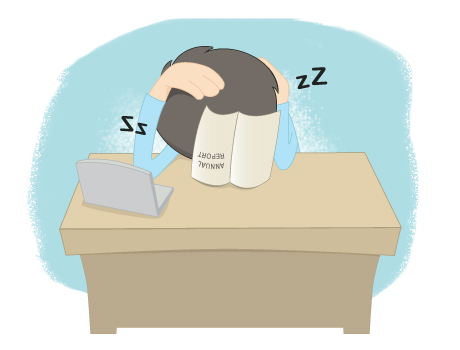
PHOTO: Ostrich style
For those who want to sleep in the classic position but are afraid of getting caught, a well-positioned annual report could hide a quick catnap.

Graphics: AsiaOne, Sharmira Shamsudin

http://www.asiaone.com/static/business/gallery/041110_sleep/images/pic4.jpg


PHOTO: Beauty style
A pretend phone conversation could, from a distance, disguise a snooze.

Graphics: AsiaOne, Sharmira Shamsudin

http://www.asiaone.com/static/business/gallery/041110_sleep/images/pic5.jpg


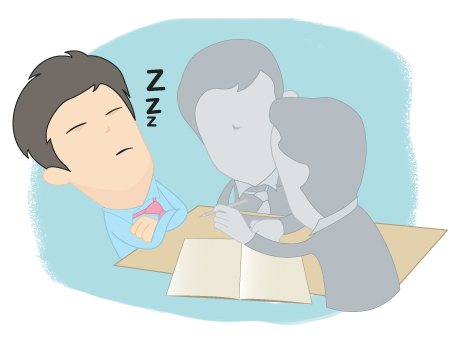
PHOTO: Boss style
This position is not for the faint of heart, as this will expose your sleeping habit to everyone. Best left to bosses.
Graphics: AsiaOne, Sharmira Shamsudin
http://www.asiaone.com/static/business/gallery/041110_sleep/images/pic6.jpg


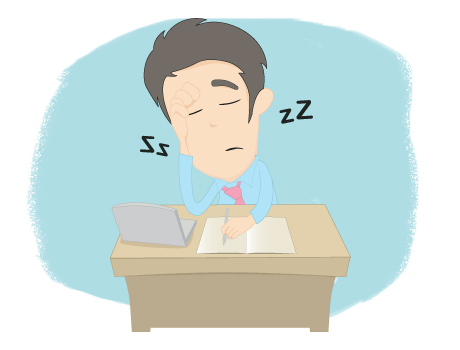
PHOTO: Hard worker style
Employees who can pretend to work while sleeping can make use of this style.

Graphics: AsiaOne, Sharmira Shamsudin

http://www.asiaone.com/static/business/gallery/041110_sleep/images/pic7.jpg


PHOTO: Can't fool anyone style Post-Its with fake eyes drawn over your eyes will make anyone suspicious that you're doing anything that can be described as working. It might work for the office clown, who can pass it off as a joke.
Graphics: AsiaOne, Sharmira Shamsudin

http://www.asiaone.com/static/business/gallery/041110_sleep/images/pic8.jpg


While this article does not advocate sleeping on the job, studies have shown that a quick power nap can actually make you more productive.

According to the Siesta Awareness group, a 10-20 minute nap in the middle of a working day can make you more productive by over 30 per cent. It also says that according to NASA, that snooze can improve your memory and concentration, as well as a hundred per cent increase of alertness.

Research by the Salk Institute for Biological Studies shows that brain activity remains high in those who take naps in the afternoon, but declines for those who don't. In fact, studies have also shown that power naps will benefit not only those who didn't get enough rest the night before, but basically everyone, as our natural body rhythms naturally plunge at about three in the afternoon. Sounds familiar? This, related to the other findings above, suggests that a quick catnap might be the boost you need to help you get through the rest of the day.

If you do decide to take your afternoon siesta at work, you are not alone.

In a 1993 interview with Dan Rather, then-US President Bill Clinton said: "If I can take a nap, even 15 or 20 minutes in the middle of the day, it is really invigorating to me. On the days when I'm a little short of sleep, I try to work it out so that I can sneak off and just lie down for 15 minutes, a half an hour, and it really makes all the difference in the world."

Other famous nappers include former UK Prime Ministers Margaret Thatcher and Winston Churchill, former US presidents John F Kennedy and Ronald Reagan, Albert Einstein, Leonardo da Vinci, Johannes Brahms, Beethoven, and Benjamin Franklin. And we must not forget the Spanish, who to this day, still traditionally go for their post-lunch siesta.

So if you must take that power nap to rest, recharge, and rejuvenate, research shows it's better that you do.

Just don't sleep until you clock out and leave the office.
By Ellen Joy Anastacio


PHOTO: But even if a night doesn’t work out, I can always rely on sleep’s wonderful little sibling: the daytime nap!
http://graphics8.nytimes.com/images/blogs/niemann/posts/2009/09/15nap04.jpg
http://niemann.blogs.nytimes.com/2009/09/14/good-night-and-tough-luck/


Reference

No truth to retirement-lifespan link

TODAY THURSDAY AUGUST 5, 2010, PAGE 12, VOICES
From
http://imcms2.mediacorp.sg/CMSFileserver/documents/006/PDF/20100805/0508VOC014.pdf
Website:
http://www.todayonline.com/Voices/EDC100805-0000051/No-truth-to-retirement-lifespan-link
Letter from
Larry Haverkamp, 05:55 AM Aug 05, 2010


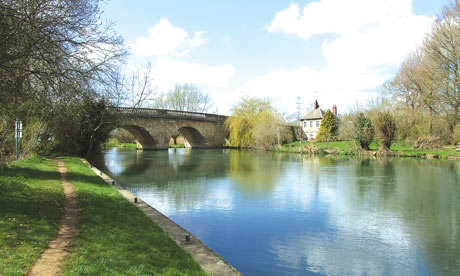
PHOTO: Swinford toll bridge in Oxfordshire offers the chance of a tax-free income. Photograph: Allsop LLP
http://static.guim.co.uk/sys-images/Money/YYY_News/Site_gifs/2009/11/17/1258469519818/Swinford-toll-bridge-001.jpg
http://www.guardian.co.uk/money/2009/nov/17/swinford-toll-bridge-for-sale


I REFER to the letter "Retire early, live longer" by Tan Kok Tim (Aug 3). It refers to Minister Mentor Lee Kuan Yew's comments in "I don't think there should be a retirement age: MM" (July 29).

The author claims Mr Lee is wrong to say people should keep working. He argues that people will live longer if they retire early and cites a study by Boeing Aerospace retirees which found that staff who retired at 50 had an average lifespan of 86, and that those who retired at 65 lived to an average age of only 66.8 years.

He says the study found that "for every year a person works beyond age 55, he lives an average of two years less".

Mr Tan is not correct. Boeing Corporation has put out a one-page paper on its webpage titled: "Let's retire the rumour about life expectancy." It explains that the graphs and study attributed to Boeing are a hoax.


PHOTO: http://www.dfas.mil/careers/benefits/retirement/retirement.jpg
http://www.dfas.mil/careers/benefits/retirement.html


The first sentence of the paper is: "An incorrect but alarming chart that claims to show the life expectancy of Boeing retirees has been circulating on the Internet.

"It is not based on fact. There is no correlation between age at retirement and the life expectancy of Boeing retirees.

"We examine data regularly for trends. Our data shows that life expectancy of a Boeing retiree does not depend on age at retirement ... (This analysis) is based on 4,699 random samples over thirty years."


PHOTO: http://www.charlesandhudson.com/archives/retirement-home-deals.jpg
http://www.charlesandhudson.com/archives/news/2009/02/


According to Ms Julie Curtis, an actuary at Boeing: "The idea that working longer will shorten a Boeing employee's life expectancy simply isn't true.

"I've been looking at the data since 1983, and the length of a retiree's life is unrelated to the age at his or her retirement. Our retirees tend to live a long time no matter how old they are when they retire."

Boeing adds: "The first inaccurate life expectancy chart surfaced in the early '80s, and versions of it have been floating around for years - almost as an 'urban myth'."

So, it looks like Minister Mentor's intuition about working longer to live longer might not be so far off after all. Other research backs it up.

A study published in the British Medical Journal looked at 3,500 workers in the petrochemical industry who retired at ages 55, 60 and 65. It found that employees who retired at 55 had a significantly increased mortality compared with those who retired at 65. It noted, however, that some workers may have taken early retirement for health reasons.

An expert on ageing, Ms Sally Greengross, is chief executive of the International Longevity Centre in Britain, and claims that greater social engagement and involvement is key to improving the health of older people. "Work is a huge part of this equation, and provides mental and physical activity, self-esteem, social interaction and income for many of us. Sudden retirement may not be the honeymoon we expect it to be," she said.

The director-general of Age Concern, Mr Gordon Lishman, has a similar view. He said: "After stopping work, it is vital for older people to stay mentally and physically active to enjoy a fulfilling retirement."

My two cents: A worthwhile pastime is writing letters to Today. After completing this one, I feel rejuvenated already.
Letter from Larry Haverkamp, 05:55 AM Aug 05, 2010


Reference

Retire early, live longer

TODAY TUESDAY AUGUST 03, 2010, PAGE A10, VOICES
From
http://imcms2.mediacorp.sg/CMSFileserver/documents/006/PDF/20100803/0308VOC012.pdf
Website:
http://www.todayonline.com/Voices/EDC100803-0000036/Retire-early,-live-longer
Letter from
Tan Kok Tim, 05:55 AM Aug 03, 2010


PHOTO: If we are stay in the pressure-cooker corporate world until the age of 65 or older, it could impact how long we live.
http://retireoverseasnow.com/wp-content/uploads/2009/11/woman.jpg


Studies show that you die two years earlier for every year you work beyond 55

I REFER to Minister Mentor Lee Kuan Yew's comments in "I don't think there should be a retirement age: MM" (July 29).

Japanese Nobel Laureate Dr Leo Esaki once spoke on the relationship between longevity and retirement age. He revealed that the pension funds in many large companies such as AT&T, Boeing, Lockheed, Lucent, and so on, are overfunded as many who retire at the age of 65, usually die within two years of retirement.

Separately, Dr Ephrem Cheng of the University of Alberta did an actuarial study of lifespan versus age at retirement, based on the number of pension cheques sent to Boeing Aerospace retirees. It found that staff who retire at the age of 50 had an average lifespan of 86. Those who retire at the age of 65 live to an average age of just 66.8.

This study concludes that for every year a person works beyond the age of 55, he lives an average of two years less.

In other words, Boeing employees who retire at the age of 65 receive pension cheques for only 18 months, on average, before dying. Lockheed, similarly, found that employees retiring at the age of 65 take only an average of 17 months of pension prior to death.

People who retire at the age of 65 or older probably put too much stress on their ageing bodies and minds, such that they develop serious health problems that ultimately force them to retire. With such long-term stress-related problems, they die within two years after they retire.

On the flipside, people who retire early might either be richer or better able to plan and manage the various aspects of their life, health and career well, such that they can afford to retire early and comfortably.

Many of these early retirees still continue doing some work, but on a part-time or project basis, at a more leisurely pace, without the stress of the daily grind.

Most Japanese workers retire at the age of 60 or under. One wonders if this is a factor contributing to the long average lifespan the Japanese enjoy.

The lesson here: As you get older, you should consider planning your career path and financial matters so that you can retire comfortably at an early age, and enjoy a long and happy life in retirement.

On the other hand, if we are encouraged to stay in the pressure-cooker corporate world until the age of 65 or older, it could impact our health and lifespan.

I hope Singaporeans will factor in how stressful their jobs are at work when contemplating at what age to retire. There are hidden costs to not having a retirement age that may not be obvious until it is too late.
Letter from Tan Kok Tim, 05:55 AM Aug 03, 2010


Reference

Give the aged less strenuous jobs

MY PAPER TUESDAY AUGUST 03, 2010, PAGE A16, VIEWPOINTS
From
http://myepaper.mypaper.sg/ebook/web_php/fvbrowserjs.php?urljs=http://myepaper.mypaper.sg/ecreator/sphopf/mya030810cnd_opf_files/mya030810cnd.js&ver=Gen
Website:
http://news.asiaone.com/News/Latest%2BNews/Showbiz/Story/A1Story20100803-230154.html
By
KWAN JIN YAO, Tue, Aug 03, 2010


PHOTO: http://usera.imagecave.com/dianetavegia/Simple_flowers/2820572280029210395S600x600Q85.jpg
http://forums.crosswalk.com/m_505853/mpage_27/tm.htm


PHOTO: KWAN JIN YAO
MY PAPER TUESDAY AUGUST 03, 2010, PAGE A16, VIEWPOINTS

I REFER to the report, "MM: Work as long as you can" (my paper, July 29).

The subject of retirement and the change in the retirement age from 62 to 65 in 2012 are interesting issues, because of Singapore's struggles with an ageing population.

Given our country's demographics, declining birth rate and evolving workforce, the number of years that the elderly spend working would have a significant impact on the nation's future socioeconomic outlook.


PHOTO: http://usera.imagecave.com/dianetavegia/Simple_flowers/24.jpg
http://forums.crosswalk.com/m_505853/mpage_27/tm.htm


Minister Mentor Lee Kuan Yew said that older workers need to be productive, and that he does not think there should be a retirement age.

It is true that the continued contributions of old workers - especially white-collar employees - would be beneficial to the country's productivity.

However, it would not be fair to assume that all elderly workers would benefit from staying on in their jobs, in terms of their ability to stay engaged and feel fulfilled.


PHOTO: http://usera.imagecave.com/dianetavegia/Birds/1094664631050009466S600x600Q85.jpg
http://forums.crosswalk.com/m_505853/mpage_27/tm.htm


White-collar and other workers in advisory positions would be able to contribute to their companies, after handing over the reins to younger coworkers.

With reduced responsibilities, and no work that requires physical strength, many such workers would be more than happy to remain in their jobs.


PHOTO: http://usera.imagecave.com/dianetavegia/Simple_flowers/1431970040042027859S600x600Q85.jpg
http://forums.crosswalk.com/m_505853/mpage_27/tm.htm


Regrettably, the same cannot be said for workers in other positions.

It is unfortunate that some individuals continue to work long hours in physically demanding jobs, sometimes under tremendous pressure.


PHOTO: http://malariousmick.files.wordpress.com/2010/02/dscf6500.jpg


It is not uncommon to see old workers clearing plates at food centres, as well as cleaning public areas and offices, to make ends meet.

Because of their probable lack of education, lack of access to privileges since young and the spiraling costs of living, they are subject to a lifetime of work to feed their families and themselves.


PHOTO: http://usera.imagecave.com/dianetavegia/Simple_flowers/cam.20050320.215852.7.tn.jpg
http://forums.crosswalk.com/m_505853/mpage_27/tm.htm


Perhaps the most ideal way to deal with an ageing workforce would be to facilitate the retention of workers through a process that would meet their needs.

Convince employers to engage elderly staff in less strenuous work, and introduce flexible working hours so that they can work in conditions that are optimal for them.


PHOTO: http://usera.imagecave.com/dianetavegia/walk.jpg


More importantly, there needs to be more coordinated assistance programmes to provide support to the senior citizens who are genuinely in need.

Having an official retirement age is positive, because it serves as milestone that marks a time for individuals to rest, after decades of economic contribution.


PHOTO: http://usera.imagecave.com/dianetavegia/Wyngaard.flowers_0179_lg.jpg


Without it, elderly workers might push themselves to keep working, instead of enjoying the rest they rightfully deserve.

Ultimately, the choice to retire depends on the individual.

He will have to consider a plethora of concerns, such as his ability to support his family, his capabilities and his health.

But he should not be forced to bow to the pressure to keep working.


PHOTO: http://usera.imagecave.com/dianetavegia/fenceline-colour.jpg


HELPDESK
我的字典: Wǒ de zì diǎn

Retirement: 退休 - tuì xiū
Handing over the reins: 移交权力 - yí jiāo quán lì
Retention: 保留 - bǎo liú
Plethora
: 过多 - guò duō


PHOTO: http://usera.imagecave.com/dianetavegia/Simple_flowers/cam.20050320.215852.7.tn.jpg
http://forums.crosswalk.com/m_505853/mpage_27/tm.htm


Interesting Quote:
Jesus had no servants, yet they called Him Master.
Had no degree, yet they called Him Teacher.

Had no medicines, yet they called Him Healer.

Had no army, yet kings feared Him.

He won no military battles, yet He conquered the world.

He committed no crime, yet they crucified Him.
He was buried in a tomb, yet He lives today.

Diane Tavegia
Source:
http://forums.crosswalk.com/m_505853/mpage_27/tm.htm


PHOTO: http://usera.imagecave.com/dianetavegia/Simple_flowers/24.jpg
http://forums.crosswalk.com/m_505853/mpage_27/tm.htm


Reference